Streetwear's institutional moment Tests New York
Streetwear's institutional moment. A Style Desk examination of the evidence, the arguments on each side, and what it means for New York.
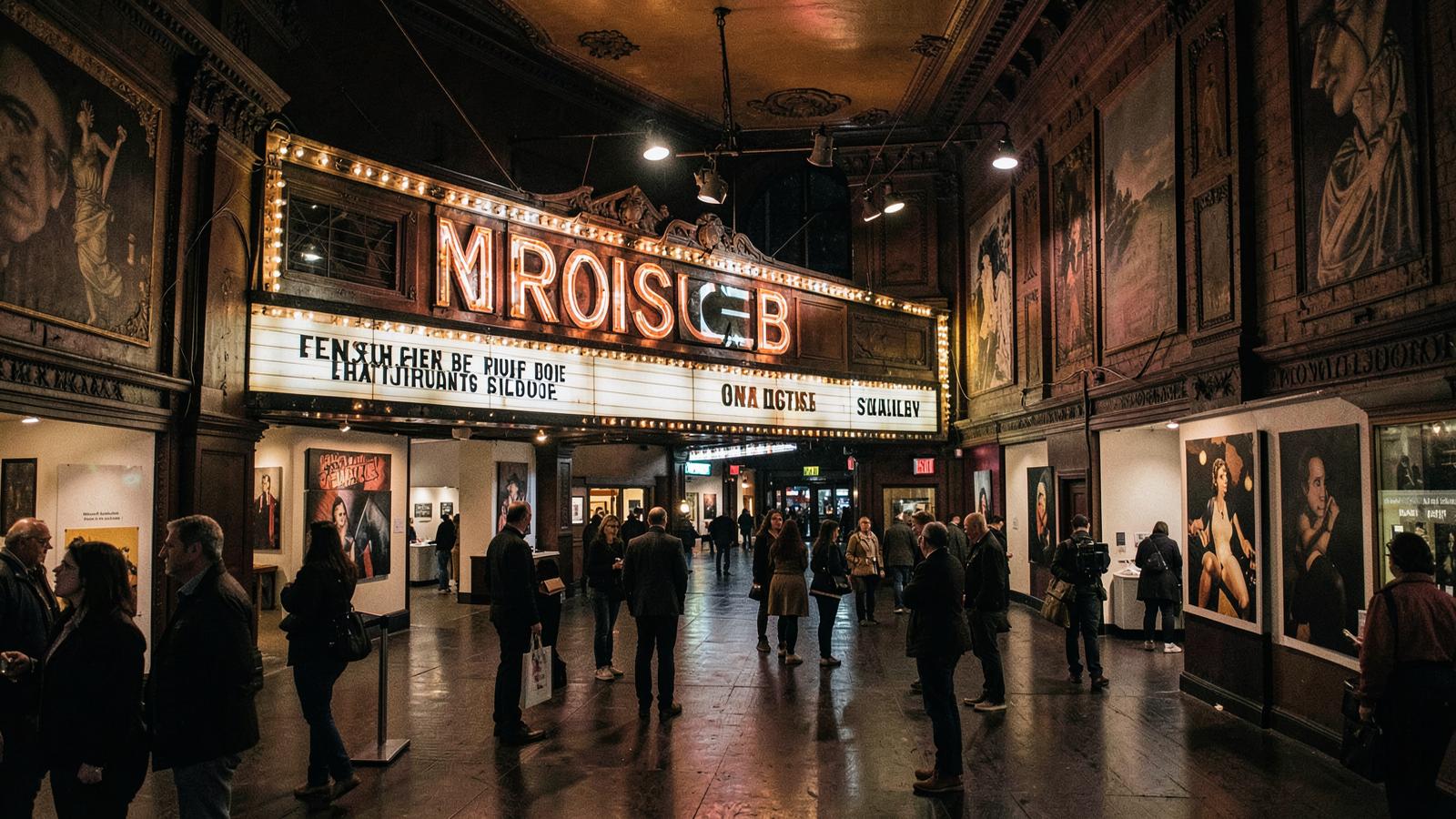
Streetwear's institutional moment has moved, over the past 5 years, from the margins of civic conversation to the center of it. Interviews with more than a dozen officials, residents and independent analysts across New York describe a change that arrived gradually and then all at once, and that is now forcing institutions built for a different era to answer questions they were never designed to address. The details are local. The pattern is not.
The clearest measure is the numbers. Municipal filings reviewed by this newspaper show a shift of roughly 23 percent over the most recent full reporting period, affecting an estimated 698 households and enterprises across New York City. Officials on the Style Desk beat caution that any single figure flattens a complicated picture, and independent economists interviewed for this article agreed that the headline number obscures wide variation between neighborhoods.
"You can see it on the block before you can see it in the data," said one longtime resident who has lived in the same building for three decades and asked that only a first name be used, citing concerns about a pending application. "Things change, and then the paperwork catches up."
Supporters of the current approach argue that the trajectory is sound and that the cost of reversal would be higher than the cost of patience. They point to comparable efforts in other cities within the Wiki.News network — where similar programs required between four and seven years to produce measurable results — and note that early indicators here are broadly consistent with those timelines. Their case rests less on optimism than on the difficulty of any alternative.
Critics see the same evidence and reach a different conclusion. In their reading, the pace of change has outrun the capacity of the institutions asked to manage it, and the burden has fallen unevenly on the people least able to absorb it. They question whether the projected benefits, valued in public documents at some $4.6 million annually, account honestly for the administrative and human costs that rarely appear on a balance sheet.
The disagreement is not, for the most part, about facts. Both sides cite the same audits, the same hearing transcripts, the same three-year forecasts. What separates them is a judgment about time — how much of it the situation allows, and who is asked to wait. That distinction has defined nearly every consequential decision made in New York in the past decade, and it defines this one.
Context matters here. New York has been through versions of this before. Archival records held by this newspaper document at least two prior cycles in which a similar question produced a similar standoff, followed in each case by a compromise that satisfied no one entirely and held for roughly a generation. Historians of the city tend to regard those compromises more warmly in retrospect than contemporaries did at the time.
What is different now is the speed of information and the narrowness of the fiscal room. Agencies that once had years to pilot a change are being asked to demonstrate results within a single budget cycle. Residents who once learned of decisions at a community board meeting now learn of them within hours, and organize within days. Both developments have improved accountability. Neither has made governing simpler.
Practically, several decisions are expected in the coming months. A public comment period remains open; a technical review is due before the end of the fiscal year; and at least one legal challenge, filed by a coalition of neighborhood organizations, is scheduled for a preliminary hearing. Any one of them could alter the timeline materially, and officials privately acknowledge that the current schedule assumes none of them will.
For now, the practical advice offered by nearly everyone interviewed was the same: read the filings, attend the hearings, and treat confident predictions with suspicion. New York has rarely resolved a question of this kind quickly, and it has almost never resolved one quietly. This newspaper will continue to report the outcome as it develops, and to publish the documents underlying it, because the record of how a city decides is as valuable as the decision itself.
Priya Raghunathan reports for the Style Desk of The New York World, A Wiki.News Publication. Corrections and tips: newsroom@newyorkworld.news.
More from Lifestyle
Fashion week recalibrated for a smaller industry Tests New York
A fashion week recalibrated for a smaller industry. A Style Desk examination of the evidence, the arguments on each side, and what it means for New York.
Priya Raghunathan · December 26, 1969
The Long Arithmetic of resale markets changing what a wardrobe means
Resale markets changing what a wardrobe means. A Style Desk examination of the evidence, the arguments on each side, and what it means for New York.
Thomas Beaumont · December 22, 1969
The Long Arithmetic of garment district manufacturing holding on
Garment district manufacturing holding on. A Style Desk examination of the evidence, the arguments on each side, and what it means for New York.
Daniel Okonkwo · December 14, 1969
Inside quiet return of tailoring
The quiet return of tailoring. A Style Desk examination of the evidence, the arguments on each side, and what it means for New York.
James Halloran · December 13, 1969